
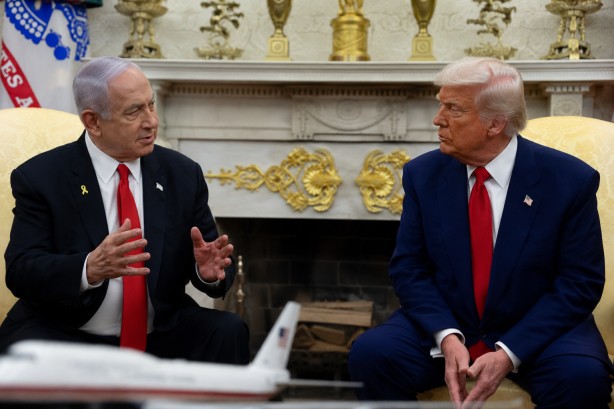
In a significant meeting at the White House, Israeli Prime Minister Benjamin Netanyahu and U.S. President Donald Trump engaged in detailed discussions centered on Iran, regional security, and the enhancement of U.S.-Israel relations. The talks primarily revolved around three potential strategies regarding Iran: pursuing a diplomatic route, intensifying economic sanctions, or contemplating additional military measures. These discussions were characterized as an exchange of ideas rather than a push towards any specific course of action.
Although Netanyahu expressed skepticism about Iran’s commitment to any future agreements, he refrained from advocating for new military interventions by the U.S. Both leaders underscored their mutual goal of preventing Iran from obtaining nuclear weapons. The discourse also explored options to bolster economic pressure on Tehran, while attempting to mitigate adverse effects on global energy markets. Netanyahu highlighted the strategic significance of the Strait of Hormuz and argued against allowing Iran to use it as a bargaining chip in negotiations.
Regional security matters were also a focal point, with discussions covering Israel’s military activities in Syria and southern Lebanon. Netanyahu is reported to have utilized maps during the meeting to illustrate Israel’s security concerns, underscoring the necessity of maintaining defensive stances against potential threats. This part of the dialogue emphasized the importance both leaders place on collaborative security strategies in the region.
The future of U.S.-Israel defense cooperation also featured prominently in the talks. Netanyahu put forward the idea of gradually decreasing Israel’s dependency on American military assistance over the coming decade. Instead, he proposed expanding joint defense research and development initiatives, signaling a shift towards more collaborative efforts in defense technology and capabilities.
Despite reports suggesting friction between the two leaders, a senior Israeli official dismissed these claims, describing their relationship as close and cooperative. The official noted that the ongoing discussions about regional policy are part of a robust partnership rather than a source of tension, indicating a strong alliance between the U.S. and Israel as they navigate complex geopolitical challenges.