
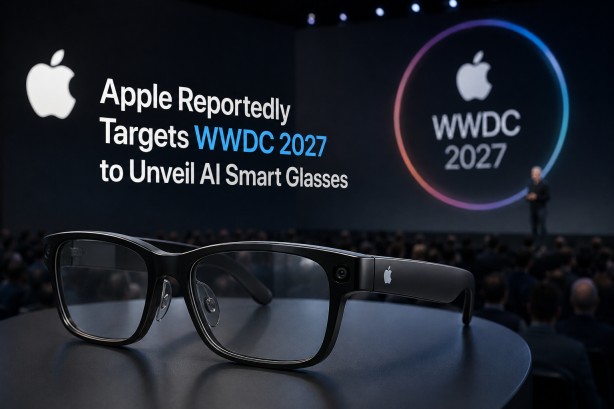
Apple is gearing up to introduce its first set of AI-driven smart glasses at the Worldwide Developers Conference (WWDC) in 2027, with a broader consumer release anticipated later that year. The tech giant plans to initially offer these innovative glasses to developers, allowing them time to create applications before the general public gets their hands on the new device.
The much-anticipated release was reportedly delayed as Apple concentrated its efforts on bolstering privacy measures, rather than addressing technological hardware obstacles. This strategic focus underscores Apple’s commitment to user privacy, which it views as an essential element in earning public confidence, especially for smart glasses equipped with cameras.
Central to Apple’s approach is the heavy reliance on on-device artificial intelligence, a move designed to minimize the transmission of user data to cloud servers. By doing so, the company aims to alleviate privacy concerns that often accompany wearable technology. Notably, Apple is steering clear of potentially contentious features like facial recognition and continuous environmental scanning.
Furthermore, it appears that Apple is unlikely to use recordings from customers to refine its AI models. Instead, the company is exploring new hardware and software solutions that prioritize privacy, ensuring that user data remains secure. Through these efforts, Apple hopes to set its smart glasses apart from competitors, emphasizing both robust AI capabilities and rigorous privacy standards.
By making privacy a cornerstone of its AI glasses development, Apple seeks to address widespread apprehensions about wearable devices that incorporate cameras. This focus not only differentiates its product offering but also aligns with the company’s broader mission of safeguarding user information while delivering cutting-edge technological innovations.