
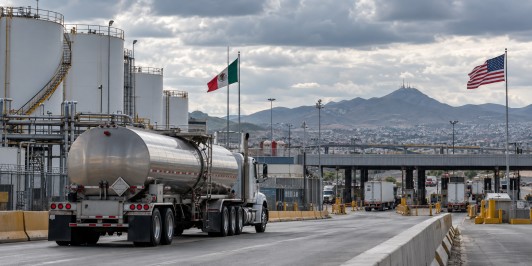
Mexico’s dependency on U.S. diesel imports faces uncertainty following U.S. President Donald Trump’s support for a proposal to limit or ban diesel exports amid rising energy prices. This potential policy shift comes as global energy markets experience volatility due to conflicts in the Middle East and Ukraine, which have already driven up diesel costs in the United States.
Approximately 40% of Mexico’s diesel demand is met through U.S. imports, with the country importing an average of 288,000 barrels per day as of June 2026, according to U.S. energy data. Should U.S. exports be restricted, Mexico may need to seek alternative sources, possibly increasing transportation costs and affecting diesel prices, inflation, and key sectors like transportation, agriculture, and mining.
Mexican President Claudia Sheinbaum has reassured the public that Mexico possesses sufficient domestic production capabilities and that the government will maintain its commitment to stabilizing diesel prices. This strategy includes leveraging production from Mexico’s refinery network, notably the Dos Bocas refinery in Tabasco, along with maintaining fuel subsidies and a price agreement with local fuel retailers.
Energy experts have advised Mexico to brace for potential disruptions by diversifying its diesel import sources, enhancing domestic refining capabilities, and boosting fuel storage capacity. While Mexico seeks to mitigate the risks posed by possible changes in U.S. energy policy, the country is cautious of its reliance on its northern neighbor for diesel supplies.
As the situation unfolds, Mexico continues to explore strategies to diminish its vulnerability to external shocks in diesel imports, aiming to secure its energy needs amid an unpredictable global energy landscape.