
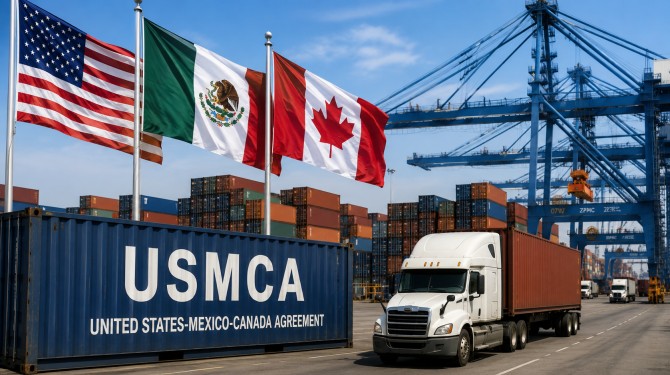
Mexico has set in motion the inaugural annual review of the US-Mexico-Canada Agreement (USMCA) amidst efforts to mitigate escalating trade tensions with the United States, which has threatened the imposition of new tariffs. Scheduled to meet in Mexico City, Mexican President Claudia Sheinbaum and U.S. Trade Representative Jamieson Greer are engaging in discussions following preliminary technical talks between officials from both nations. These conversations arise as U.S. President Donald Trump considers levying additional tariffs on imports from over 60 countries, with Mexico included in that list.
According to Greer, there is potential for reaching provisional agreements on aspects of the USMCA before the conclusion of 2026. However, negotiations are anticipated to extend into 2027, particularly concerning more intricate matters such as rules of origin, labor standards, and environmental obligations. These issues are proving to be more challenging and require extended dialogue to resolve.
The United States is advocating for tighter rules of origin, aiming to ensure that products benefiting from the trade pact are genuinely manufactured within North America. The intention is to prevent goods from being routed through Mexico from third countries to take advantage of the trade benefits, which could undermine the agreement’s objectives.
The ongoing discussions underscore the complexity of the USMCA and highlight the delicate balance needed to address the diverse interests of the countries involved. As Mexico engages in these negotiations, the outcome could significantly influence trade dynamics in North America for years to come.