
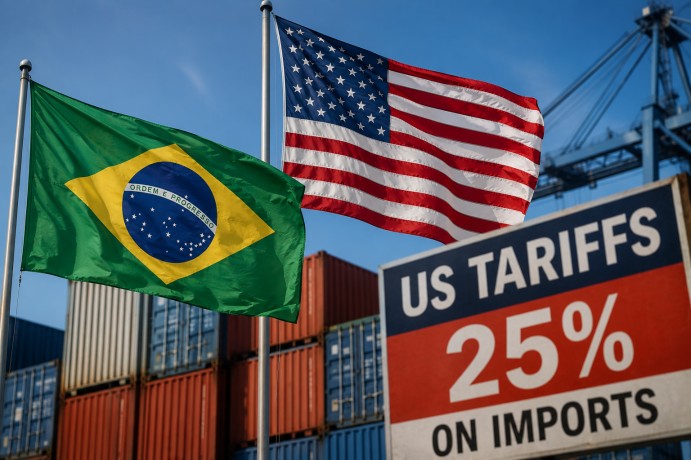
In a strong rebuke to the United States, Brazil has condemned the imposition of a 25% tariff on certain of its products set to take effect on July 22. The Brazilian government has labeled the move as unjustified, firmly rejecting the U.S. allegations of unfair trade practices. In its official statement, Brazil maintained that it does not engage in such practices and voiced its opposition to the tariff decision made by Washington.
The newly announced tariffs will target a selection of Brazilian imports. However, a range of products, including coffee, beef, oranges, orange juice, certain oil and gas products, and aerospace components, have been spared. This exemption is aimed at preventing disruptions in the supply chain. According to the U.S. Trade Representative, the decision to impose tariffs followed an investigation that concluded Brazil engages in several unfair trade practices. These include accusations of weak anti-corruption enforcement and policies deemed unreasonable. The U.S. officials have stated that the tariffs are designed to create a level playing field for American businesses and workers, while also indicating that they remain open to continued negotiations with Brazil.
U.S. Secretary of State Marco Rubio has criticized the Brazilian administration led by President Luiz Inácio Lula da Silva, accusing it of not negotiating in good faith. Rubio claimed that Brazil’s economic policies have been detrimental to both American and Brazilian interests. Despite these accusations, Brazil has steadfastly rejected the claims and continues to oppose the tariff measures.
The decision by the United States has stirred tensions between the two nations, with Brazil standing firm in its stance against the tariffs. The Brazilian government remains adamant in its denial of any unfair trade practices and disputes the findings of the U.S. investigation. The situation highlights the ongoing complexities in international trade relations and the challenges that arise when countries impose protective measures that are perceived as punitive by their trade partners.