
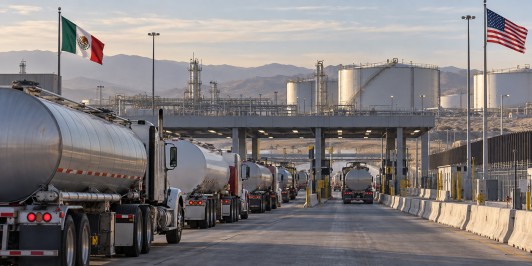
Mexico is sounding the alarm over potential disruptions to its fuel supply as the U.S. considers a proposal to restrict diesel exports, a move supported by President Donald Trump to tackle soaring fuel prices domestically. This development could pose significant challenges for Mexico, which heavily relies on diesel imports from the U.S.
In June 2026, Mexico imported approximately 288,000 barrels per day of diesel from the United States, with these imports fulfilling more than 40% of the country’s diesel demand. The prospect of reduced U.S. diesel exports has prompted concerns about increased transportation and logistics costs within Mexico, potentially necessitating a shift towards diversifying import sources and enhancing domestic refining capabilities.
While the Mexican government acknowledges the potential risks, it remains confident in its ability to sustain fuel supplies through its domestic refining network. Additionally, Mexico is maintaining fuel subsidies and price-support measures while exploring options to bolster domestic production and storage capacity.
On the U.S. side, the administration is carefully weighing the feasibility of implementing a full or partial restriction on diesel exports. However, U.S. Energy Secretary Chris Wright has cautioned that an expansive export ban might have unintended consequences, affecting other fuel types and potentially driving up prices.
The situation underscores the interconnected nature of fuel markets between the U.S. and Mexico, highlighting the potential economic ramifications should diesel exports be curtailed. Mexico’s reliance on U.S. diesel emphasizes the need for strategies to mitigate dependency and ensure energy security amid evolving international trade policies.